In this guide
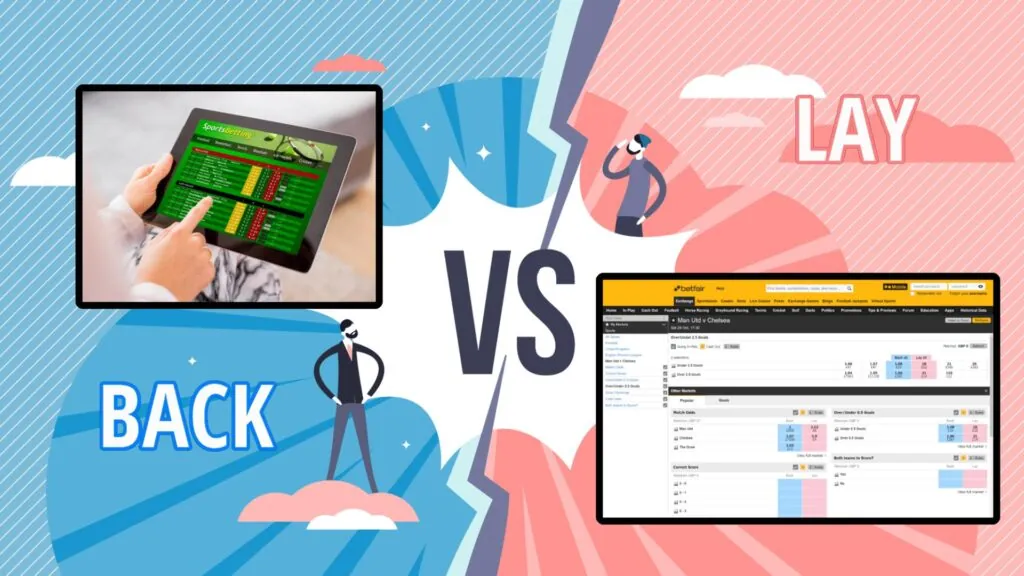
Matched betting means backing a selection at a bookmaker and laying it at a betting exchange, so the offer carries the value rather than the result. The two bets roughly cancel each other out, and what's left is the offer itself: a free bet, an early payout, or an extra place in a horse race.
Quick answer You place two opposite bets on the same thing: a back bet with the bookmaker and a lay bet at an exchange. At the right stakes, they roughly cancel out, so you lose a little (the "qualifying loss") whatever happens. The offer is where the value comes from. It uses real gambling accounts and real money, mistakes cost money, and it's for over-18s only.
How Matched Betting Works in One Paragraph
A bookmaker offers you something extra to bet with them. A typical sign-up offer looks like "bet £20, get a £20 free bet". If you just placed the £20 bet, you might lose it. So you also bet against the same outcome at a betting exchange, where other people take the opposite side. That second bet is the lay. If the team wins, the bookmaker pays you and the lay loses. If the team doesn't win, the bookmaker keeps your stake and the lay pays you. Pick the right lay stake and both results land in almost the same place.
You end up a few pence or a pound down on that first bet. That's the price of getting the offer. Then you use the free bet the same way, and that's where the money comes from, if every bet goes on at the right stake.
Back Bets, Lay Bets and the Exchange
A back bet is the normal bet everyone knows: "Home side to win". You place it at a bookmaker.
A lay bet is the opposite: "Home side not to win". You win the lay if the match is a draw or an away win. You can't lay at a normal bookmaker. You do it on betting exchanges such as Smarkets, Matchbook or Betfair. Checked against Smarkets', Matchbook's and Betfair's terms on 26 October 2026.
When you lay, you're acting as the bookmaker for someone else. That means you need enough money in the exchange account to pay them if their bet wins. That amount is your liability. Our guide to lay betting explained goes through liability in detail, because it's the bit that catches most people out.
The exchange also takes commission on your net winnings in a market. When we checked, Smarkets and Matchbook charged 2%, and Betfair's rate depended on your My Betfair Rewards package (2% on the Basic package). Checked against Betfair's, Smarkets' and Matchbook's terms on 26 October 2026. Commission changes the lay stake, so it goes into every calculation.
Step One: The Qualifying Bet, With Real Numbers
Say a bookmaker offers new customers a £20 free bet when they place a £20 bet at odds of 2.00 or more. This is a made-up offer to show the method, not a current one.
You back the Home side for £20 at 3.00 at the bookmaker. At the exchange, the lay price for the Home side is 3.10, and the exchange charges 2%.
- Lay stake: £19.48
- Liability (what you need in the exchange): £40.91
- If the Home side wins: +£40.00 at the bookmaker, −£40.91 at the exchange = −£0.91
- If the Home side draws or loses: −£20.00 at the bookmaker, +£19.09 at the exchange after commission = −£0.91
Same result either way. That 91p is your qualifying loss. It exists because the lay price (3.10) is a bit higher than the back price (3.00), and because of commission. The closer the two prices, the smaller the loss. Our article on what qualifying loss to accept covers how small is small enough.
You can run these numbers with your own prices in our free 2UP calculator, which shows the lay stake and liability.
Step Two: The Free Bet
Once the qualifying bet settles, the bookmaker gives you the £20 free bet. A common type is "stake not returned": if it wins, you get the winnings but not the £20 itself. That's how the free bets we checked worked. Checked against 888sport's and Matchbook's terms on 26 October 2026.
That changes the maths, so a free bet needs its own lay stake. Say you put the £20 free bet on a selection at 6.00 and lay it at 6.40 (2% commission):
- Lay stake: £15.67
- Liability: £84.64
- If the selection wins: +£100.00 at the bookmaker, −£84.64 at the exchange = +£15.36
- If it loses: £0 at the bookmaker, +£15.36 at the exchange after commission = +£15.36
You've turned a £20 free bet into £15.36, about 77% of its face value. Take off the 91p from step one and the whole offer comes to £14.45, but only if all four bets went on at those prices and stakes.
Odds matter a lot here. The same £20 free bet at 2.00, laid at 2.10, keeps only £9.42 (47%). Longer odds keep more of a stake-not-returned free bet, but they need a bigger liability. Our guide to free bets, stake returned vs not, goes into this.
Where the Value Comes From After Sign-Up Offers
Sign-up offers are for new customers, so they run out. What keeps matched betting going is offers for existing customers, and three of them are what Innovision Labs is built around.
2UP (the "2 goals ahead" early payout). At the bookmakers we checked, your football bet is paid as a winner if your team goes two goals ahead, even if the match ends level or lost. Checked against the terms of bet365, Sky Bet, Ladbrokes, Coral, Unibet and BoyleSports on 26 October 2026. You back and lay pre-match as normal, which costs a small qualifying loss. Most of the time, that's all that happens. Now and then your team goes 2-0 up and then fails to win. The bookmaker has already paid, and your lay wins too. Using the step one bet, that's +£40.00 from the bookmaker plus +£19.09 from the lay: +£59.09 on one match. It's rare, so 2UP is a long game with losing weeks. The 2UP guide covers it properly.
B90 (Betfair Sportsbook's 90-minute payout). Betfair Sportsbook pays a match odds bet as a winner if your selection is winning at 90:00, even if the score changes in stoppage time. Checked against Betfair's terms on 26 October 2026. The exchange lay still settles on the final whistle, so a late equaliser can pay both sides. Read Betfair's 90 minute payout explained.
Extra Places (each-way horse racing). The bookmakers we checked pay an extra place on selected races each day, say four places instead of three. Checked against the terms of Paddy Power, Betfred, Sky Bet, Ladbrokes, Coral and Unibet on 26 October 2026. You lay the win and place parts at the exchange, where the place market pays the standard number. If your horse finishes in the extra place, both sides can pay. The extra place guide walks through one, and you can see today's extra-place races free, without an account.
What You Need Before You Start
- Age 18 or over. That's the legal minimum for betting in the UK.
- One or two exchange accounts, verified before you need them. A withdrawal is not the time to find out your ID check is pending.
- A starting balance you can afford to lose. Qualifying bets lose a little each time, liabilities tie money up, and mistakes can lose more. The step two example alone needed £84.64 sitting in the exchange.
- A calculator. Don't work out a lay stake in your head. Our free 2UP calculator gives the lay stake and liability for any back and lay price.
- A record of every bet. A spreadsheet is fine. Without one, you won't know your real result.
You don't need sports knowledge. Because the two bets cover each other, the result matters far less than getting the stakes right.
What Actually Goes Wrong
Matched betting reduces the risk of each bet. It doesn't remove it. In a Bournemouth University study reported in September 2026, researchers surveyed 2,112 UK adults doing matched betting. More than half said they'd lost money through it, and the losses were commonly put down to mistakes such as wrong calculations, misreading promotions or pressing the wrong button. These are the usual ones.
The lay never goes on. You place the back bet, the exchange page hangs, you get distracted, and the lay is never placed. Now you're just gambling £20. Place the lay straight after the back, in one sitting, and don't close the page until both are confirmed.
The price moves. The lay was 3.10 when you looked. By the time your back bet went through, it's 3.40. Your qualifying loss is now bigger than you planned. Check the lay price again right before you place the back.
The lay market is thin. The exchange might only have £8 available at your price. The rest matches at a worse one, or not at all. Look at the money available before you back.
The wrong stake or the wrong market. Laying the same amount as your back stake, typing 31 instead of 3.10, laying the wrong team, or backing the standard market when the offer runs on a separate one. Some bookmakers we checked ran 2UP on its own market. Checked against the terms of Sky Bet, Ladbrokes and Coral on 26 October 2026. Each slip turns a small known loss into an unknown one.
The offer doesn't trigger. You backed below the minimum odds, missed an opt-in, or the offer wasn't showing on your account. Read the terms before the qualifying bet, not after.
Your account gets restricted. Bookmakers can limit stakes, remove offers or close accounts. Checked against the terms of bet365, Paddy Power and Betfred on 26 October 2026. It's part of matched betting, and it's covered in what account restrictions mean. Our list of common matched betting mistakes has the rest.
When Not to Bother
If you're in debt, betting with borrowed money, or already find it hard to stop gambling, don't start. Matched betting still means logging into bookmakers every day, and that's a real risk for some people. The same goes if you can't spare the money for liabilities without worrying about it.
It's also not an income. Results vary a lot from month to month, sign-up offers run out, and accounts get restricted. Treat it as a spare-time hobby with a time and money limit you set before you start. Our guide to safer gambling for matched bettors covers the tools that help.
Is Matched Betting Legal, and Is It Taxed?
No UK law bans matched betting. You use normal bookmaker and exchange accounts within their terms. Bookmakers don't like it, which is why they can restrict accounts, but that's their commercial choice, not a legal issue.
On tax, HMRC's guidance says betting and gambling are not a trade for an individual, so winnings are not taxed as trading profits. That's general information, not tax advice, and benefits and mortgages are a different question. Our guide to matched betting, tax, benefits and mortgages covers those.
Bookmakers and exchanges can change their offers and terms at any time. Always check the current terms on their site before you bet.
Questions People Ask
Is matched betting gambling?
It uses gambling products: real bets with licensed bookmakers and exchanges. The lay covers most of the risk on each bet, but you can still lose money through mistakes, price moves or voided bets. It's 18+ only.
How much money do I need to start?
Enough to place the back bet and cover the lay liability at the same time. For the £20 qualifying bet at 3.00 above, that's about £61 in total (£20 plus £40.91). Free bets at longer odds need more liability, so only use money you can afford to lose.
Do I need to know about football or racing?
No. The stakes do the work, not your opinion. What you need is care: the right odds, the right market and the right stake on each bet.
Why do I lose money on the qualifying bet?
Because the lay price is usually a bit higher than the back price, and the exchange takes commission. That small, known loss is the cost of getting the offer.
Try the Maths Yourself
A good way to understand matched betting is to run one example. Put a back price, a lay price and your exchange commission into the free calculator and watch the lay stake and liability change. No account needed.
You can also see this weekend's 2UP fixtures free, without an account.
Safer Betting
18+ only. Matched betting uses real bets with real money, and a missed lay, a wrong stake or a price that moves can lose money. Set a deposit limit with every bookmaker and exchange you use, and only bet what you can afford to lose. If gambling stops feeling in your control, free, confidential help is at GambleAware.org or on the National Gambling Helpline, 0808 8020 133. Read our safer betting page.